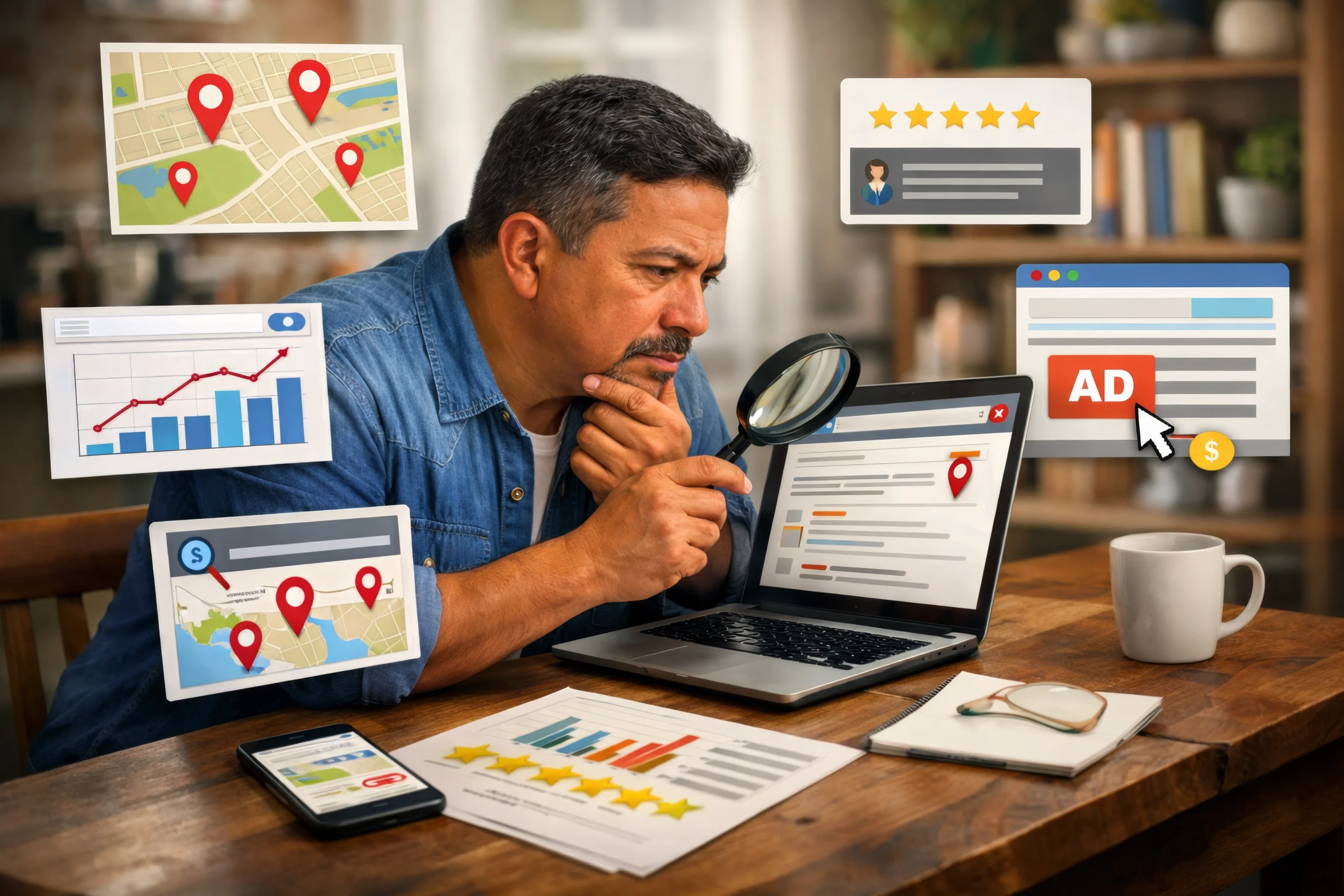

Many businesses assume that having a website or social media accounts means they’re visible. But being online isn’t the same as being found.

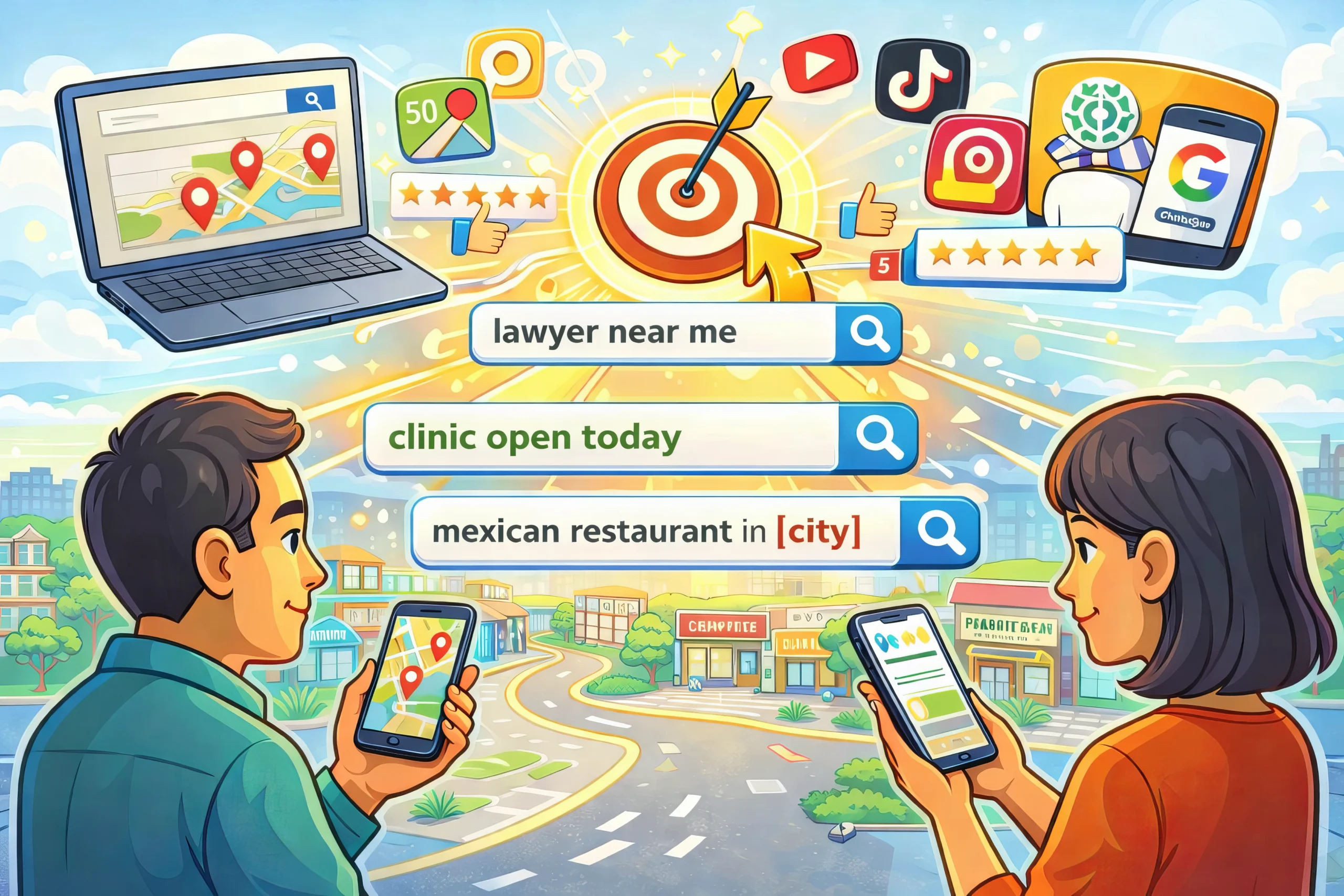
Today, people search for solutions across multiple touchpoints: traditional search engines, maps and local results, review platforms, social media, video, and even AI tools that synthesize information and surface recommendations. The way customers discover businesses has changed and it will keep evolving.

The real question isn’t whether your business is “online.” It’s whether you show up when a customer is actively searching for what you offer.

There’s an important distinction between having a digital presence and capturing purchase intent. Not all traffic carries the same weight. Strategic visibility focuses on the moment when someone has a clear need and is ready to make a decision.

When someone searches “lawyer near me,” “clinic open today,” or “Mexican restaurant in [city],” they aren’t browsing for entertainment. They’re looking for an immediate solution. That moment carries enormous value. If your business doesn’t show up there, you simply don’t exist for that customer.

In our experience working with businesses across industries, we’ve seen many invest in marketing without ever asking whether they’re actually dominating those high-intent search moments. Visibility isn’t about posting more – it’s about positioning yourself strategically where demand already exists.
What visibility actually means in 2026

Visibility in 2026 no longer depends on a single channel. It’s not just about appearing in traditional search results. Modern visibility is the ability to be present across multiple touchpoints where people search for answers, compare options, and make decisions.

A customer today might discover your business through organic results, local maps, reviews, video content, social platforms, or AI tools that summarize information and suggest options. The strategic question isn’t “which platform should I be on?”  it’s “am I present where real intent exists?”

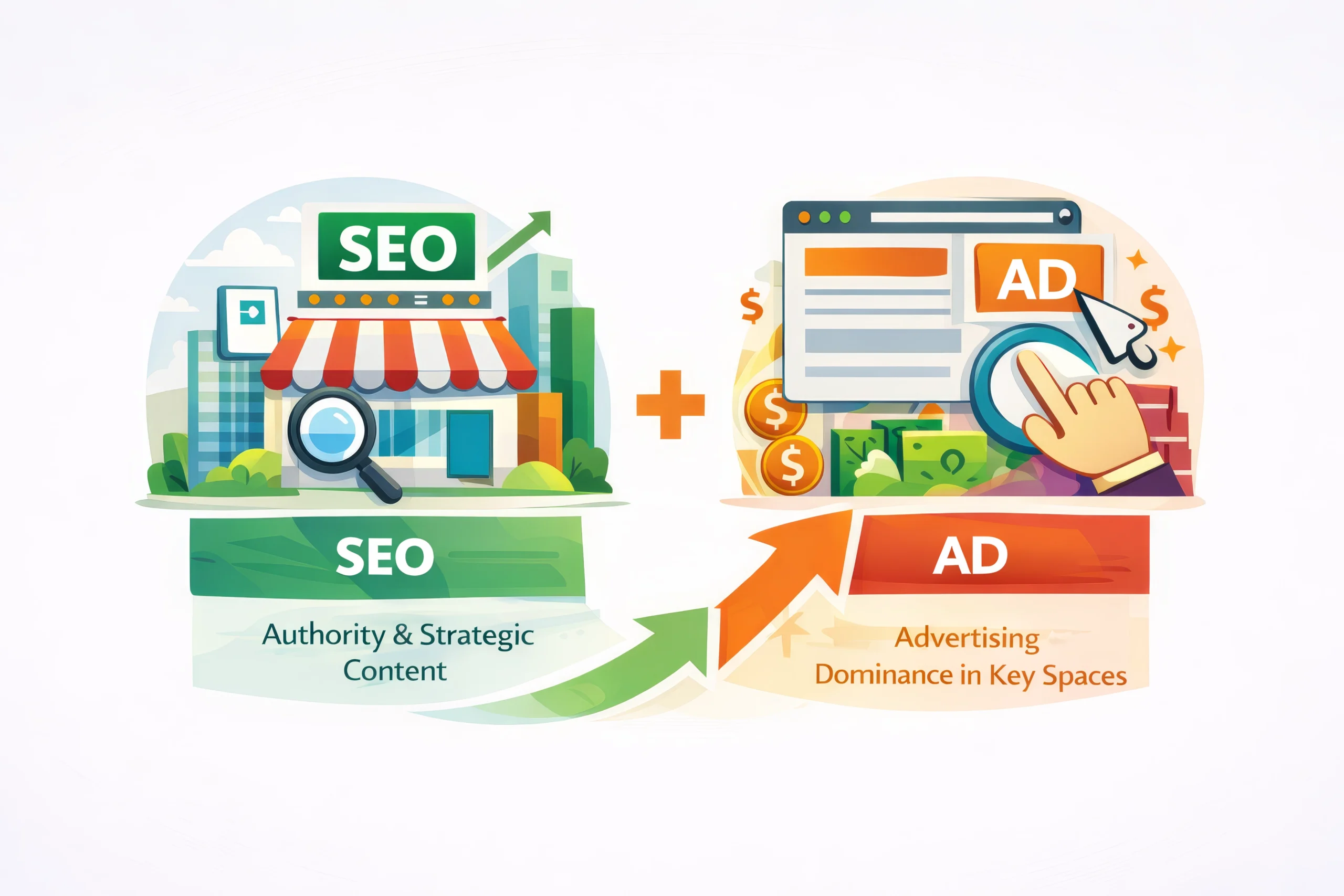
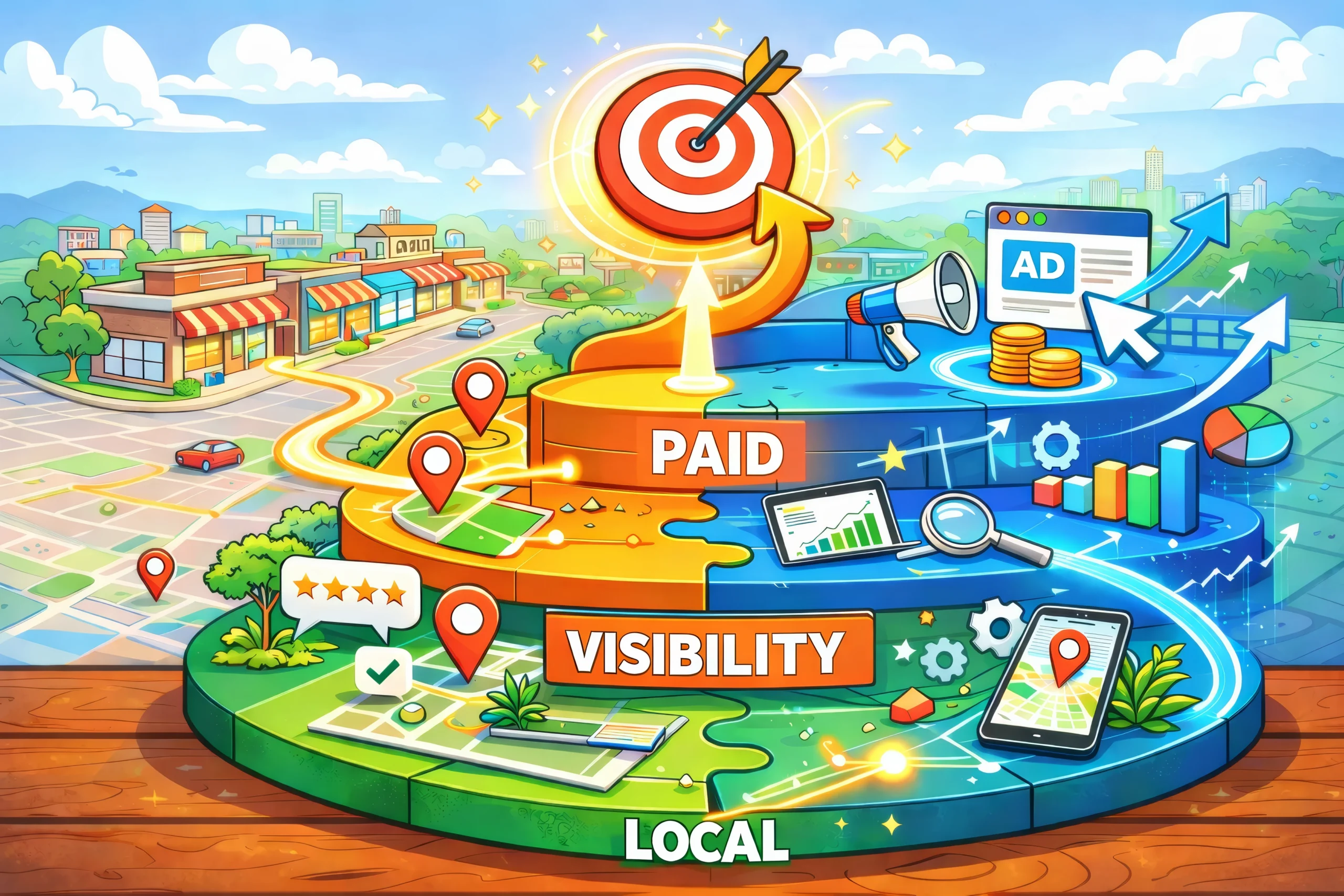
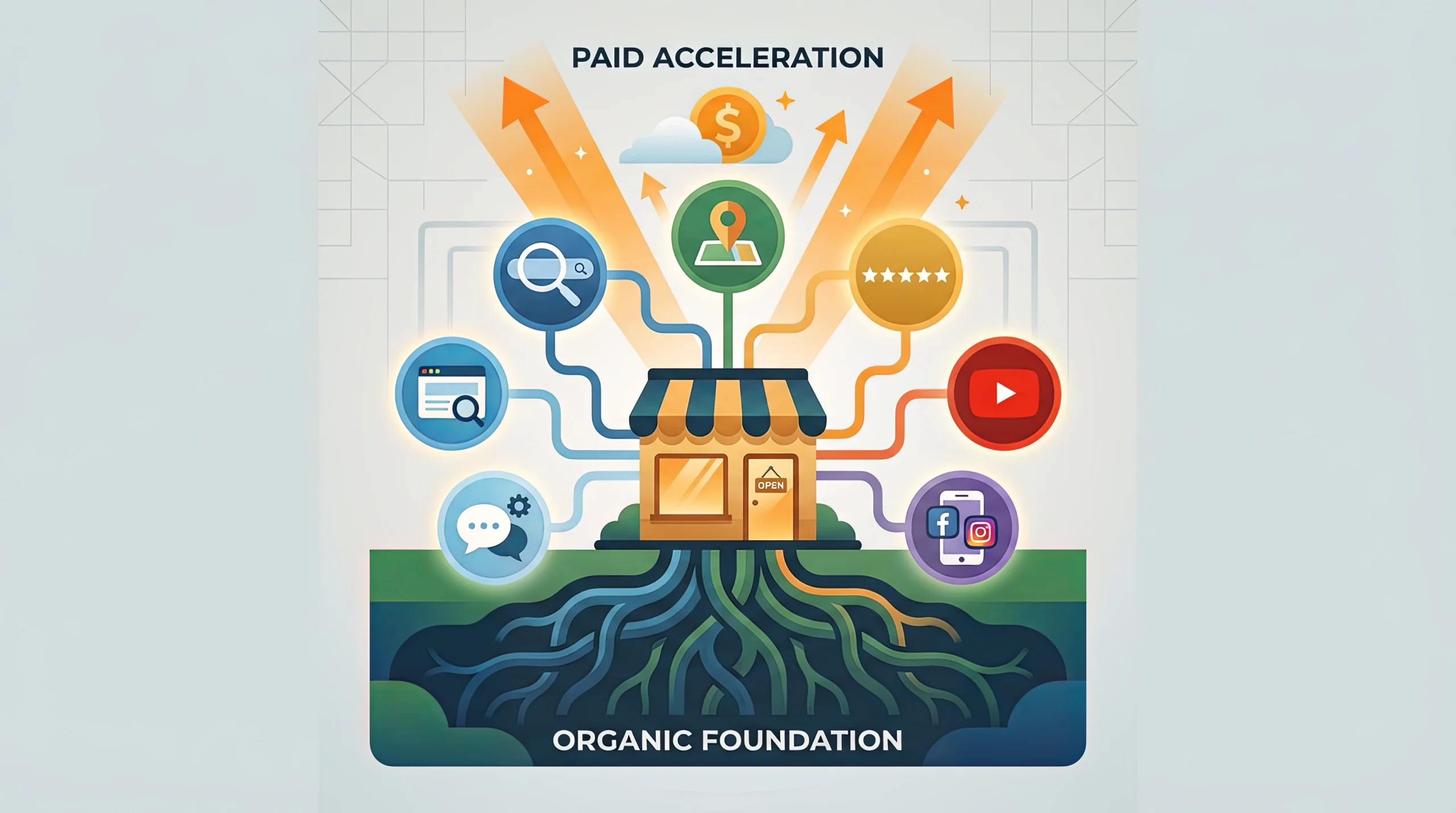
From a practical standpoint, effective visibility breaks down into two main components: organic and paid.

Organic visibility is the foundation of sustainable growth. It includes local search ranking, optimized business profiles, your website’s technical structure, content relevance, and the authority signals your digital presence sends. This is what allows you to appear consistently when someone is actively searching for your service.

Paid visibility plays a different but equally strategic – role. It doesn’t replace organic structure, but it can accelerate results, protect key searches, and reinforce your presence in competitive moments. When used correctly, it amplifies existing visibility rather than trying to compensate for its absence.

In our experience working with local businesses across different industries, we’ve consistently seen that real dominance happens when the organic foundation is well-built and paid investment is used intelligently, not reactively.

Visibility isn’t an isolated tactic. It’s an architecture that allows your business to be found at the exact moment a customer is ready to decide.

The intent moment: where opportunity really happens

Not all searches carry the same value.

There’s a meaningful difference between someone exploring information and someone ready to take action. Strategic visibility focuses on the second scenario: the intent moment.

The intent moment happens when a person has a clear, active need. They’re not researching out of curiosity. They’re trying to solve a specific problem and at that moment, the probability of conversion is significantly higher.

For example, searching “what does an employment lawyer do” is very different from searching “employment lawyer in [city].” Watching a video about restaurants is not the same as searching “restaurant open now near me.” In the first case there’s interest; in the second, there’s intent to act.

The difference between being visible in general content and being present in high-intent searches is what separates exposure from results.

In local markets, these moments tend to cluster around specific searches related to location, immediate availability, comparisons, and reputation. When your business consistently appears in those critical touchpoints, whether in organic results, maps, reviews, or digital recommendations you start building real market dominance.

Visibility without intent generates traffic. Visibility with intent generates opportunities.

In our experience, many companies invest in broad digital presence without structuring their strategy to capture these decisive moments. And that’s precisely where marketing either generates revenue or simply generates activity.

The key components of local organic visibility

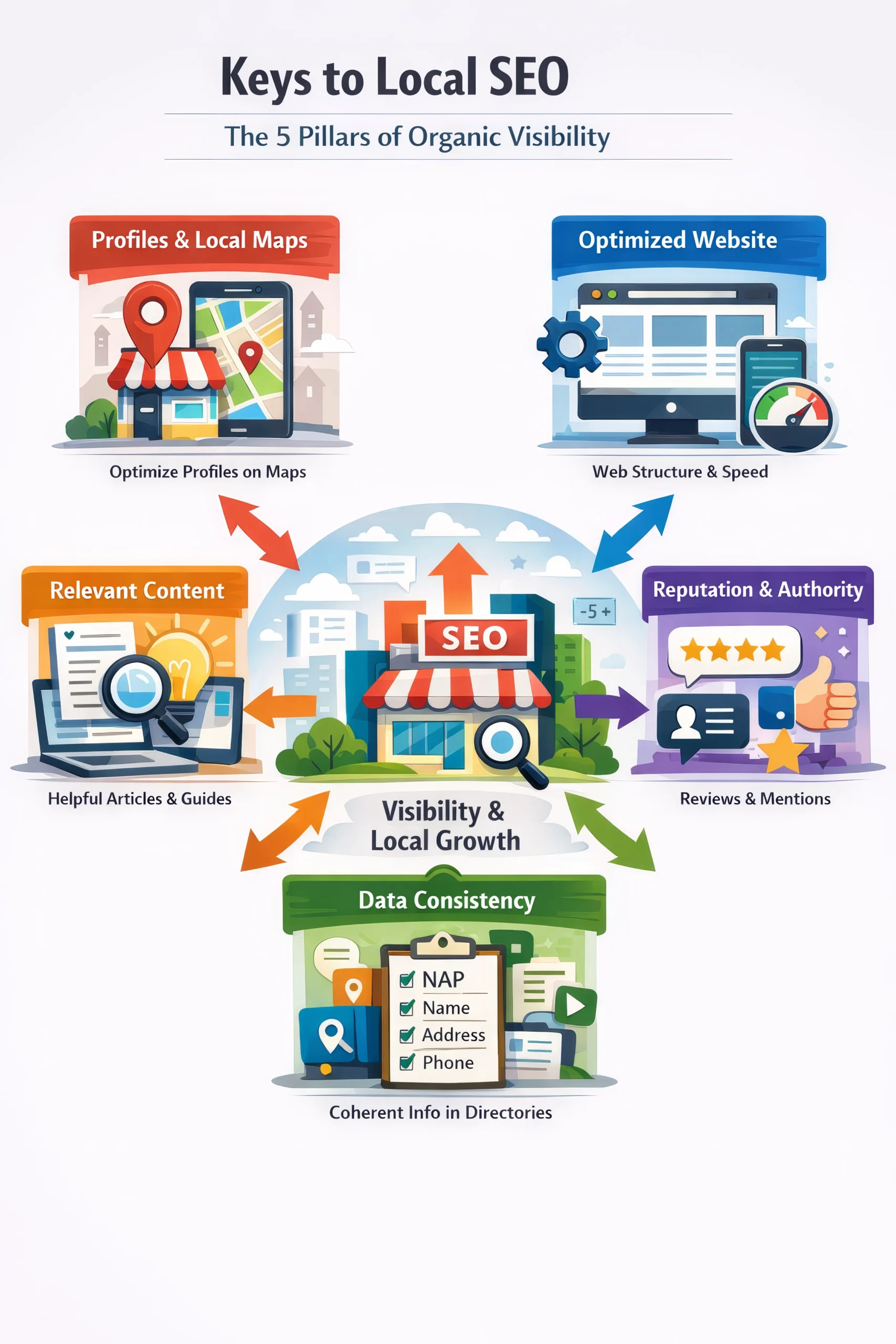
Organic visibility doesn’t happen by accident. It’s the result of multiple digital signals working together coherently. When these elements are aligned, your business doesn’t just show up, it starts cementing itself as a relevant option in your local market.

Business profile optimization and local map presence. For many high-intent searches, map results take visual and strategic priority. An incomplete, outdated profile with few recent reviews seriously limits your ability to compete in these spaces. Consistency in hours, categories, descriptions, and visual content directly influences local visibility.

Website technical structure. Having a published page isn’t enough. Your site needs to be organized so that search engines clearly understand what services you offer, where you operate, and what type of customer you serve. Elements like content architecture, mobile optimization, page speed, and semantic clarity all have a direct impact on ranking.

Content built around search intent. Publishing for the sake of publishing doesn’t build authority. Strategic content answers real questions that customers ask before hiring a service. This includes dedicated pages for each service, locally relevant content, and resources that demonstrate expertise within your industry.

Digital authority and reputation. Reviews, mentions, and external signals reinforce credibility with both algorithms and users. The frequency, quality, and recency of these interactions influence customer decisions just as much as they influence local search visibility.

Information consistency across the digital ecosystem. Directories, industry platforms, and other references all need to maintain consistent data. Inconsistencies in business name, address, or phone number can undermine algorithmic trust and limit organic reach.

When these five elements work in concert, you build a strong foundation of sustainable visibility. Without this structure, any additional effort, including paid investment, will have limited impact.

The strategic role of paid visibility

Paid visibility doesn’t replace organic structure. It complements it.

In a solid strategy, the foundation is always organic. That said, there are scenarios where paid investment plays an important strategic role: accelerating positioning in competitive markets, protecting searches related to your brand, and reinforcing presence on high commercial-intent keywords.

When a business relies entirely on ads to be visible, it becomes exposed to constant fluctuations in costs and competition. But when paid investment is built on top of a well-structured organic foundation, the impact is more efficient and sustainable.

In local markets, paid visibility can help you dominate specific spaces at key moments, especially in categories where competition is aggressive. It can also be used to ensure your business appears when someone searches directly for your name, preventing competitors from capturing that intent.

The key is understanding that advertising doesn’t create intent, it captures it. That’s why its role isn’t to replace organic visibility, but to amplify it strategically.

In our experience, the businesses that achieve the most stable results are those that first build organic authority, then use paid investment as a tool for expansion and protection, not as a last-minute fix.

Common mistakes that limit local visibility

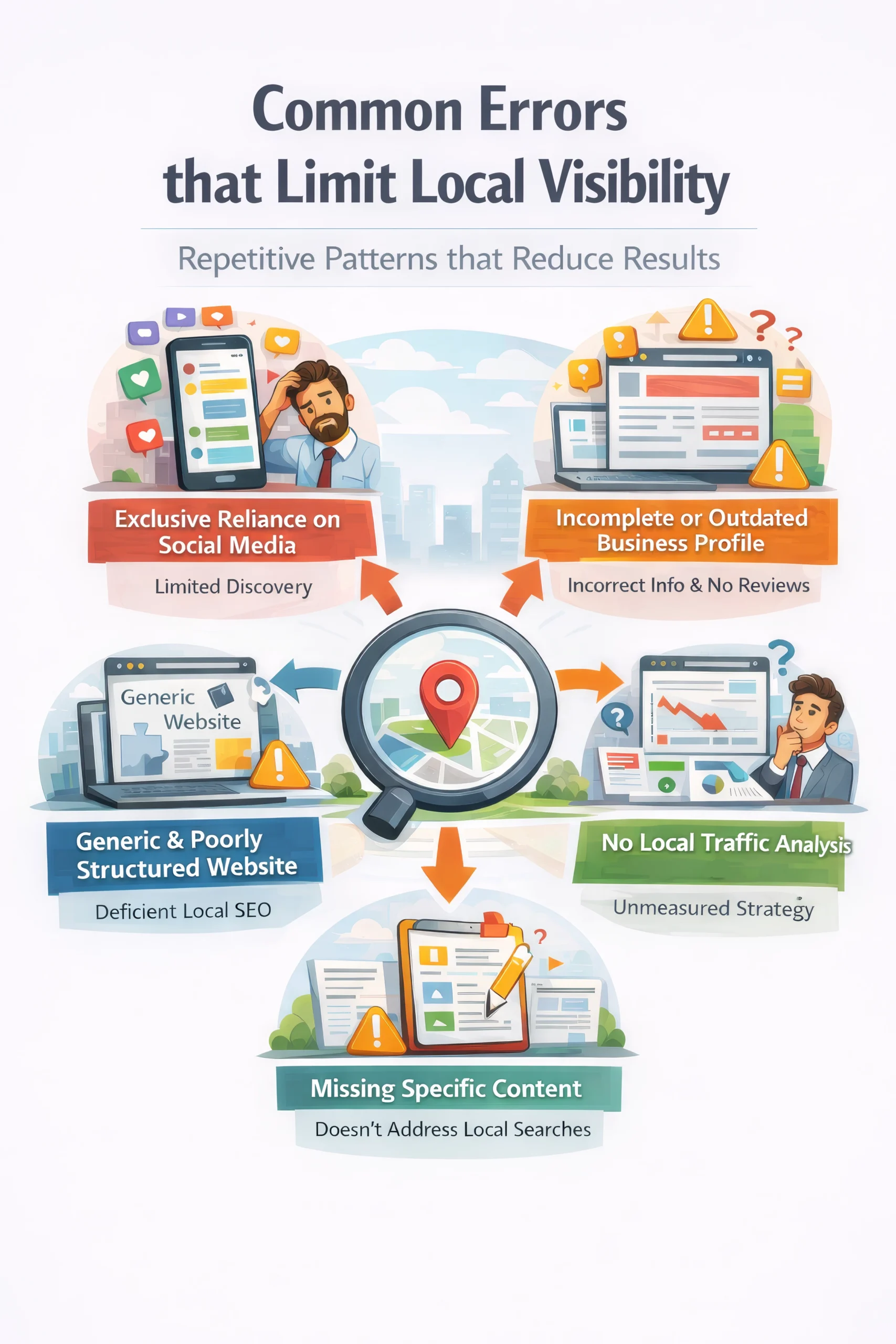
After working with businesses across a wide range of industries, we’ve identified recurring patterns that directly hurt local visibility. In most cases, the problem isn’t lack of effort, it’s lack of structure.

One of the most frequent mistakes is relying exclusively on social media for discovery. While social platforms can support your digital presence, they don’t replace visibility in active-intent searches. People aren’t always scrolling, often, they’re searching.

Another common mistake is having an incomplete or outdated business profile. Inconsistent information, poorly selected categories, or a lack of recent reviews significantly reduce your chances of appearing in competitive local results.

Many websites also aren’t structured for local search. Generic pages with no service or location focus make it difficult for search engines to understand clearly what the business offers and in which market it operates.

A lack of intent-specific content is another limiting factor. Publishing broad or unfocused information won’t help you capture specific searches tied to local services.

Finally, many businesses don’t track their actual search performance. They don’t evaluate which queries they appear for, which keywords drive real traffic, or how their rankings are evolving. Without measurement, optimization is nearly impossible.

Local visibility doesn’t come from any single action. It’s the result of multiple aligned signals. When any one of these elements breaks down, the cumulative effect reduces your ability to compete in key decision-making moments.

Digital presence vs. local dominance

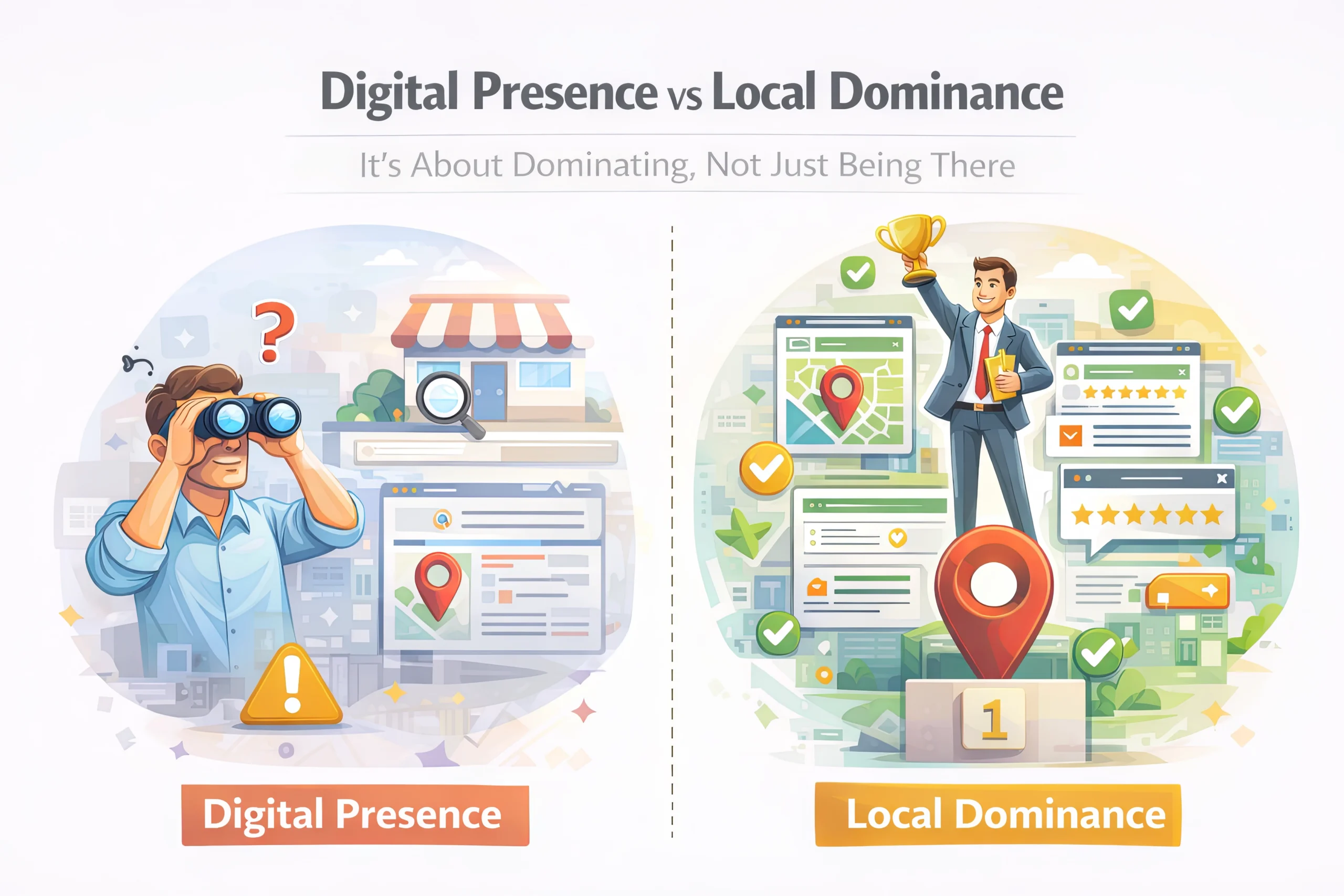
Most businesses have some form of digital presence. They have a website, active profiles, and some level of online activity. But presence isn’t the same as dominance.

Digital presence means your business exists online. Local dominance means you show up consistently and competitively when customers in your area are actively searching for your service.

A business with presence might occasionally appear in some results. A business with local dominance occupies strategic spaces reliably: relevant organic results, local maps, visible reviews, and credible mentions within its industry.

Dominance isn’t built through volume of posts or length of time in business. It’s built by aligning technical structure, authority, local relevance, and information consistency. It’s the result of clear signals that tell search engines and recommendation systems that your business is a solid option in its category.

In competitive local markets, the difference between appearing on page one and falling off the map has a direct impact on the opportunities you generate. Most users don’t explore multiple pages of results. They make decisions based on what they see first.

That’s why strategic visibility isn’t just about “being on the internet.” It’s about occupying key spaces repeatedly and reliably.

When a business achieves that level of consistency, it stops competing for scattered attention and starts consolidating a stable position within its local market.

A quick visibility diagnostic

Visibility isn’t measured by perception. It’s measured by evidence.

Many business owners feel like they’re “pretty visible out there”, but haven’t objectively assessed whether they actually show up in the moments that matter. A basic diagnostic can quickly reveal whether your current structure is working or whether there are significant opportunities being left on the table.

Start by asking yourself:

  • When someone searches for your main service in your city, does your business appear in the top results?
  • Are you consistently present in local map results?
  • Do you have recent, relevant reviews?
  • Does your website have dedicated pages for each service and location?
  • Do you know which searches are actually driving traffic to your business?
  • Are you protecting your business name in paid results when necessary?

If several of these questions leave you uncertain, your visibility probably isn’t fully optimized.

The good news is that most visibility problems don’t require starting over. They require structure, consistency, and a strategy focused on local intent.

Visibility isn’t a matter of luck or content volume. It’s the result of well-executed technical and strategic decisions.

Visibility isn’t luck. It’s structure.

Effective visibility doesn’t depend on publishing more content or impulsively throwing money at ads. It depends on understanding how search moments work, how digital signals are evaluated, and how authority is built within a specific local market.

In our experience working with businesses across industries, the difference between those that grow consistently and those that depend on unpredictable results isn’t how much they invest, it’s how they structure their digital presence.

Sustainable visibility combines a solid organic foundation, a well-optimized local presence, and the strategic use of paid investment where it makes sense. It’s not a one-off action, it’s a system that allows you to capture existing demand in a predictable way.

When your business shows up consistently at key intent moments, you stop competing for fleeting attention and start generating real business opportunities.

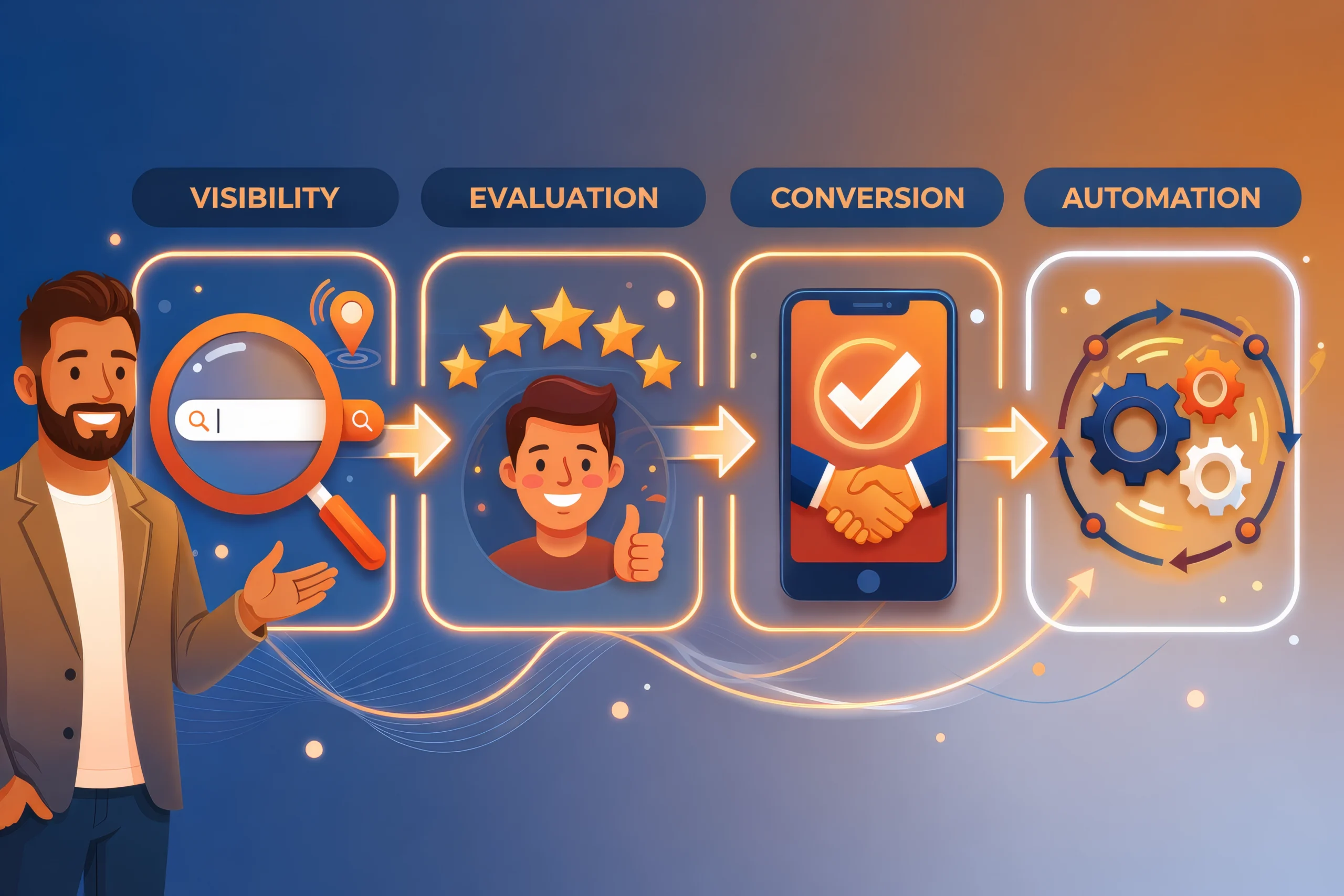
Visibility is the first step within a structured growth model. Without it, there’s no qualified traffic. Without qualified traffic, there’s no conversion.

Building visibility isn’t a matter of luck. It’s a strategic decision.

Visibility is only the beginning

Showing up when your customers are searching is essential. Without visibility, there’s no entry point for anything else.

But being found doesn’t guarantee being chosen.

Once your business appears in results, a second and equally important phase begins: evaluation. The customer reads reviews, compares options, looks for trust signals, and decides whether your business feels credible.

Then comes conversion: the ease of contacting you, the clarity of your offer, and your follow-up structure all determine whether that intent becomes a real opportunity.

And finally, automation allows the entire process to run consistently, without depending entirely on manual effort.

Visibility starts the process. But sustainable growth happens when every stage is aligned.

That’s why, within a structured growth model, visibility doesn’t work alone. It’s the entry point to a broader system that turns attention into results.