
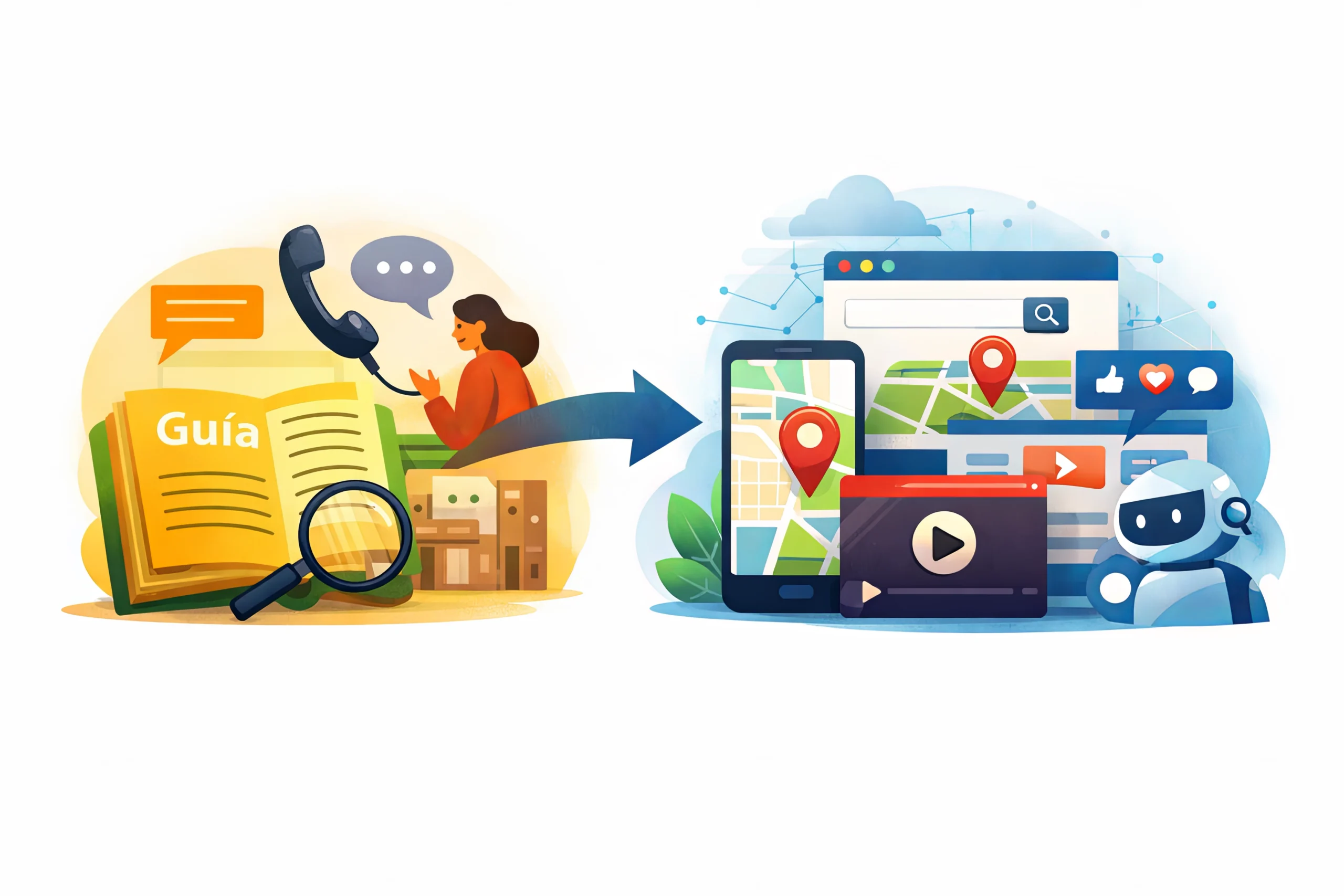
For many years, the main way to find a business was relatively simple: people searched directories, asked for recommendations, or used traditional search engines. Today that process is much broader.
Customers no longer rely on a single channel to discover options. Instead, they explore multiple platforms where they can find information, compare alternatives, and evaluate which business seems most trustworthy or convenient.
Understanding where that discovery happens is fundamental for any business that wants to improve its visibility and show up at the moments when a customer is ready to make a decision.
In fact, understanding how to make your business appear when your customers are searching for it is one of the first steps within a well-structured digital growth strategy.
Search Engines: The Starting Point for Many Decisions
For many consumers, search engines remain one of the main places where the process of finding a business begins.
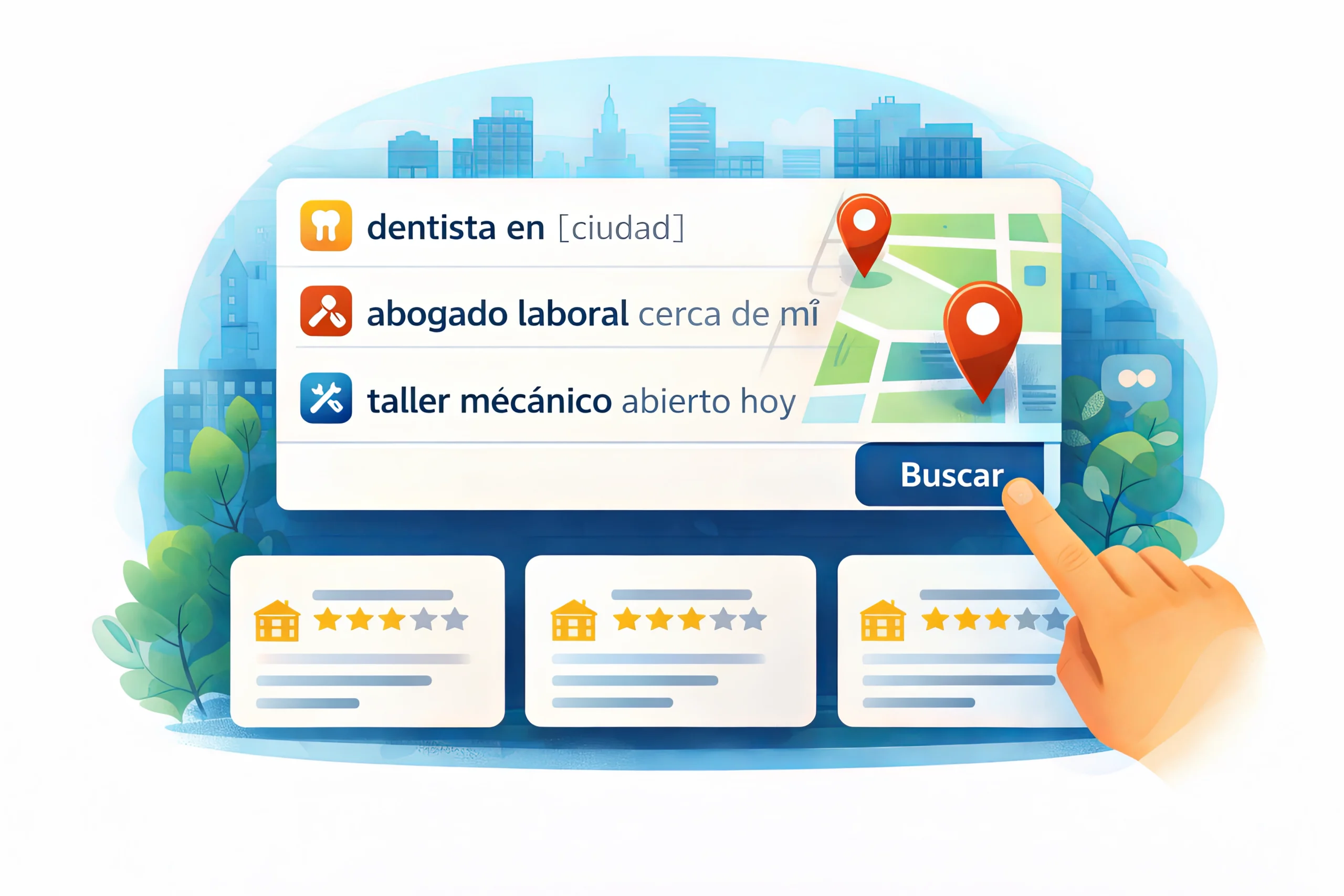
When someone needs to solve a problem or hire a service, it’s common for them to start with searches like:
- “dentist in [city]”
- “labor attorney near me”
- “auto shop open today”
These searches typically indicate that the person has a specific need and is looking for available options in their area.
For this reason, appearing in relevant search results continues to be one of the most important pillars of digital visibility.
Maps and Local Results
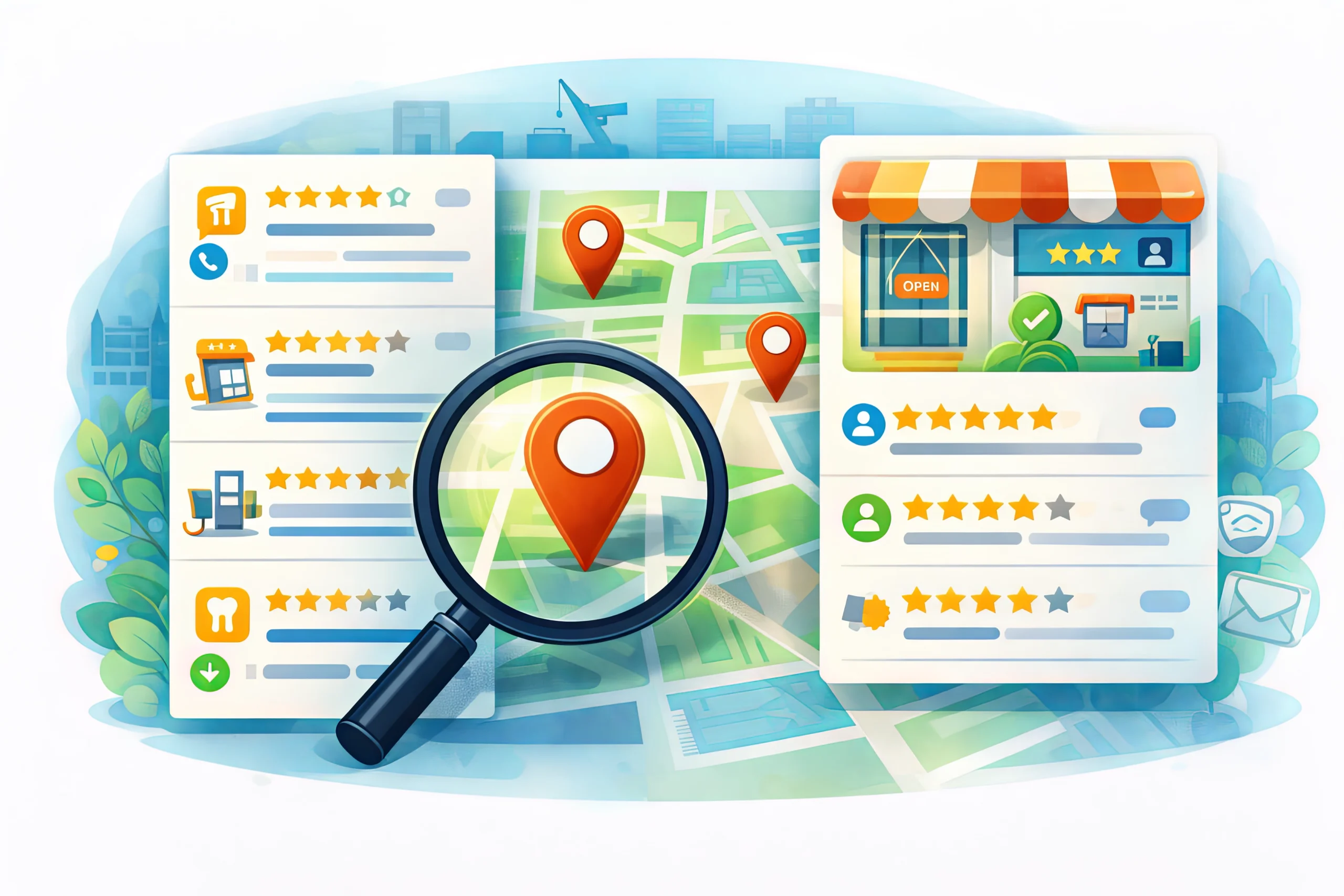
In many searches related to local services, map results have a prominent presence. These sections show nearby businesses along with useful information like hours, reviews, photos, and location.
For a customer who needs an immediate solution, this type of result makes it easy to quickly compare different options.
Local maps often directly influence decisions like:
- which business to call
- which place to visit
- which company seems most trustworthy based on its reviews
For this reason, optimizing business profiles and actively managing reviews have become important factors in digital visibility.
Review and Comparison Platforms
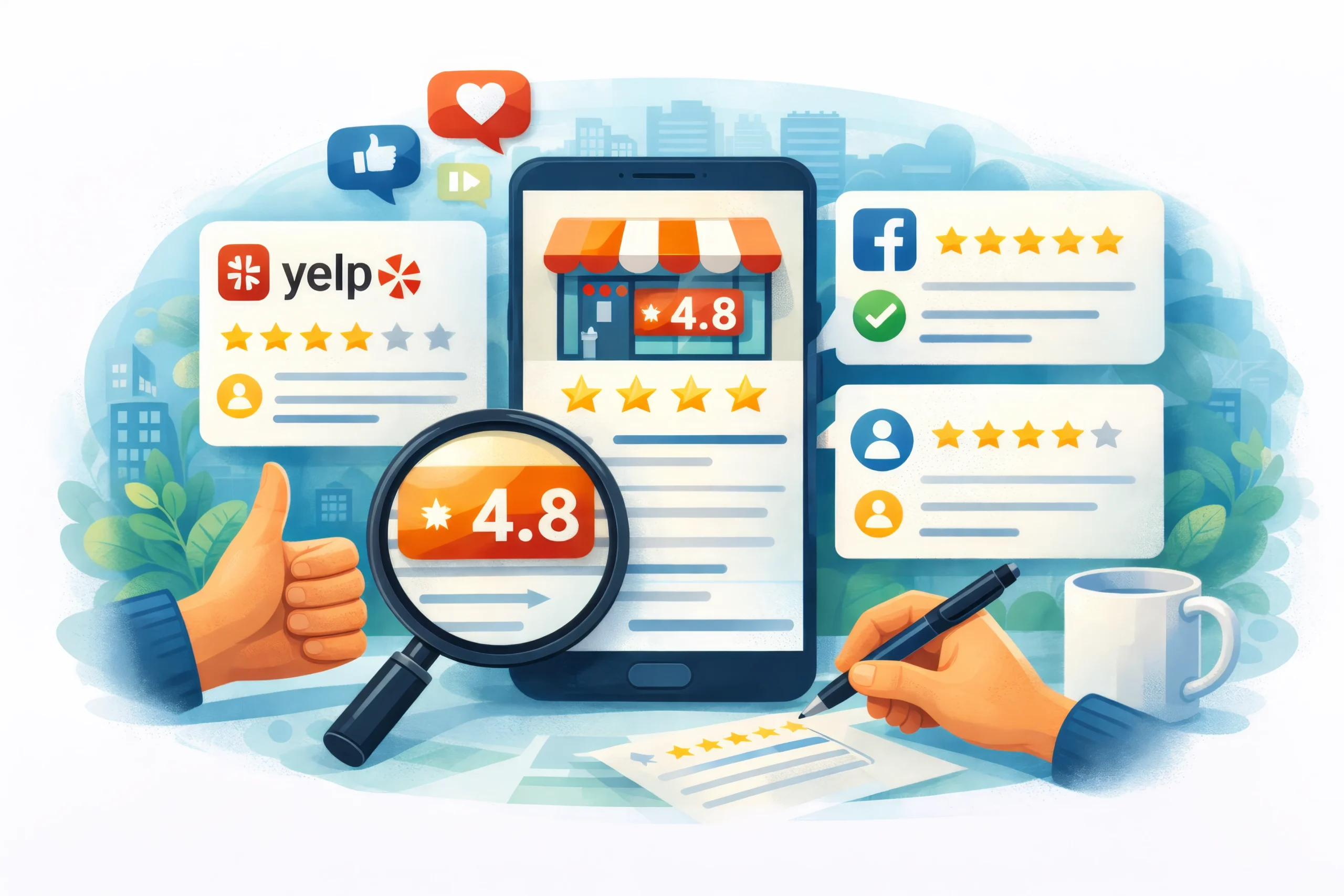
Before contacting a business, many people check other customers’ opinions to evaluate the quality of service.
Review platforms allow users to learn about previous experiences and help form an initial perception of a business’s reputation.
Although reviews are not the only factor that influences the final decision, they can play an important role when customers are comparing several options within the same category.
An active presence on these platforms helps strengthen a business’s digital credibility.
Social Media as a Discovery Space
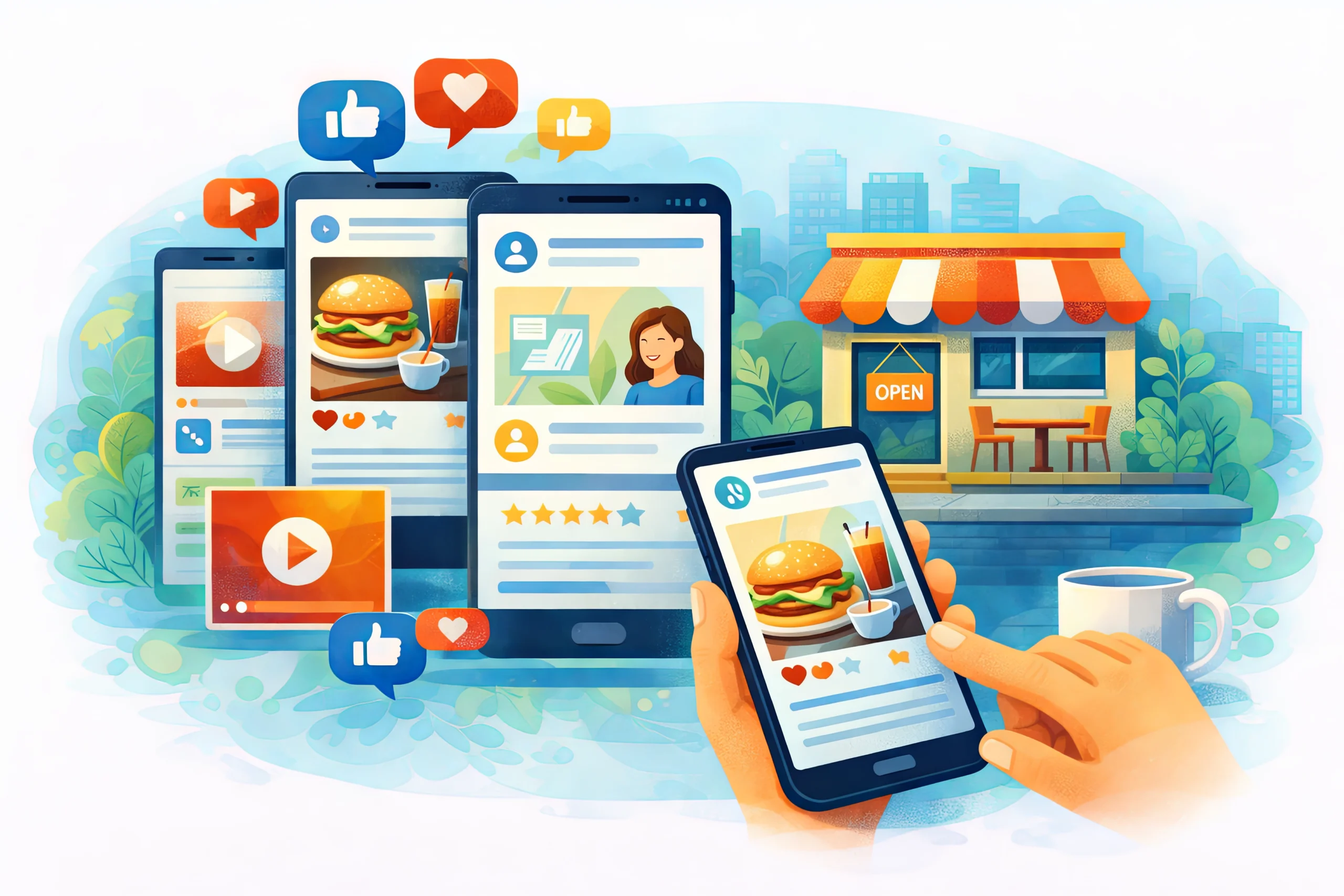
Social media has also become a place where many people discover businesses, especially when they are looking for inspiration, recommendations, or content related to specific interests.
A restaurant can appear in a user’s feed through a post, a short video, or a recommendation shared by another person. Similarly, a local business can be discovered when someone searches for information or explores content related to their community.
Although social media doesn’t always capture searches with immediate intent, it can help generate brand awareness and familiarity.
The Growth of Video as a Discovery Format
In recent years, video has become one of the most consumed content formats on the internet.
Many people prefer watching a short video that quickly helps them understand what a business offers, what a product looks like, or how a service works.
Videos can appear in different contexts within the digital environment, such as:
- social media content
- video platforms
- digital ads
- websites
- enriched search results
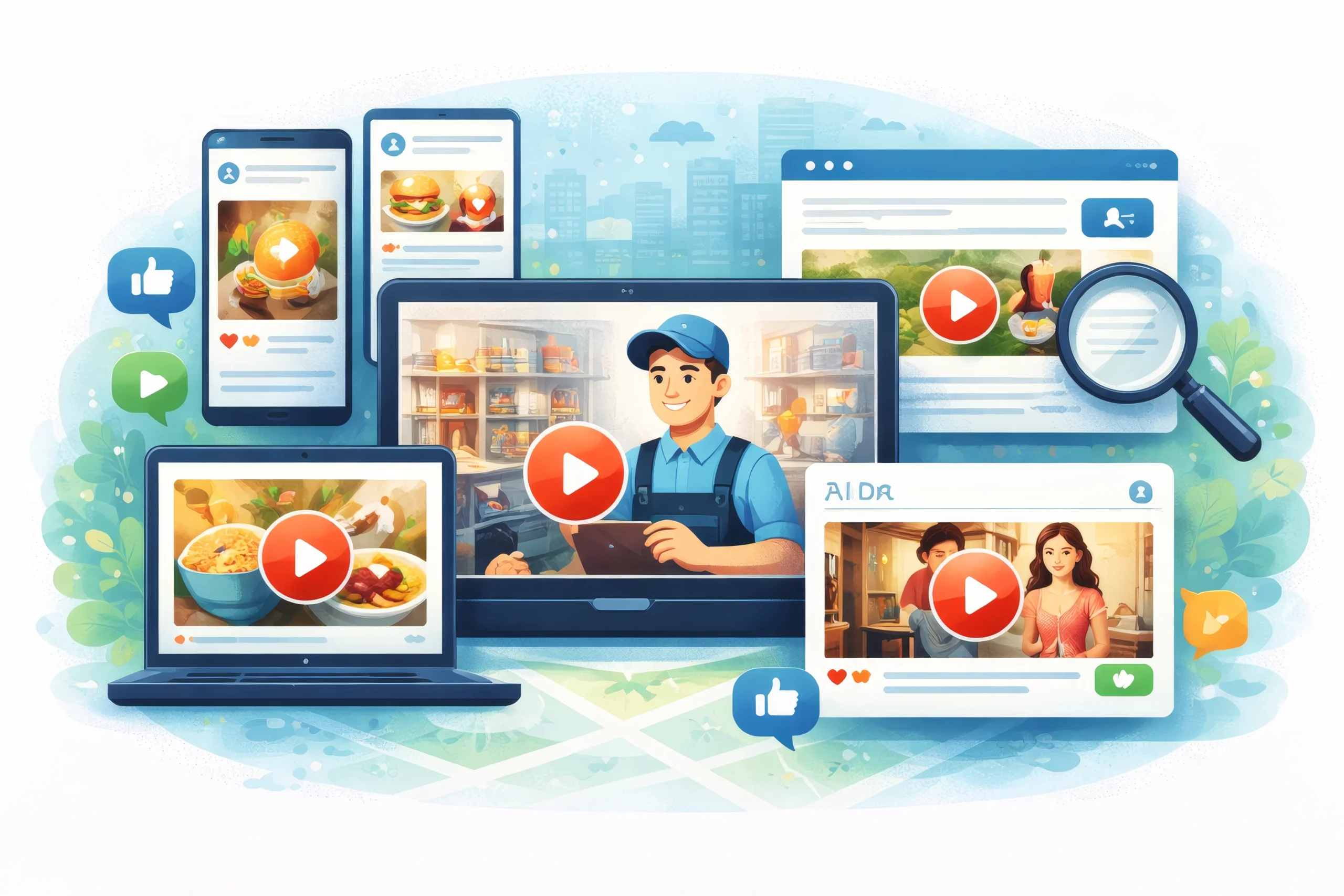
This format allows information to be communicated visually and directly, which can help a customer understand more quickly whether a business is relevant to their need.
Artificial Intelligence Tools and New Recommendation Systems
As digital technologies evolve, new ways also emerge for people to obtain information and recommendations.
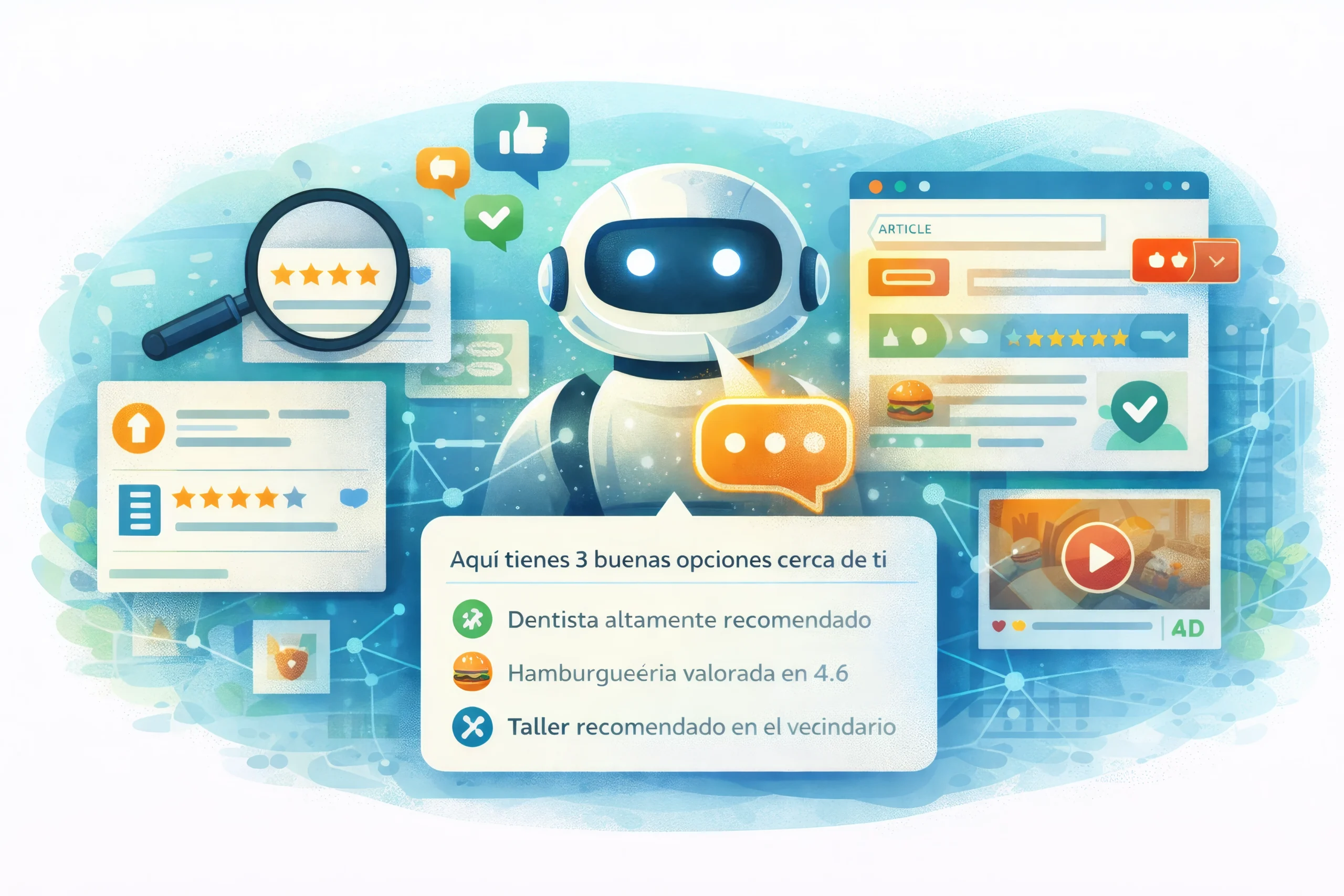
Artificial intelligence tools can synthesize content, answer questions, and suggest options based on data available on the internet. These technologies analyze signals like reviews, published content, structured information, and digital authority to generate useful responses for users.
This means that a business’s digital presence no longer only influences traditional search engines, but also systems that interpret and recommend information.
Visibility Happens at Multiple Touchpoints
One of the most important conclusions for businesses is that digital discovery no longer happens in just one place.
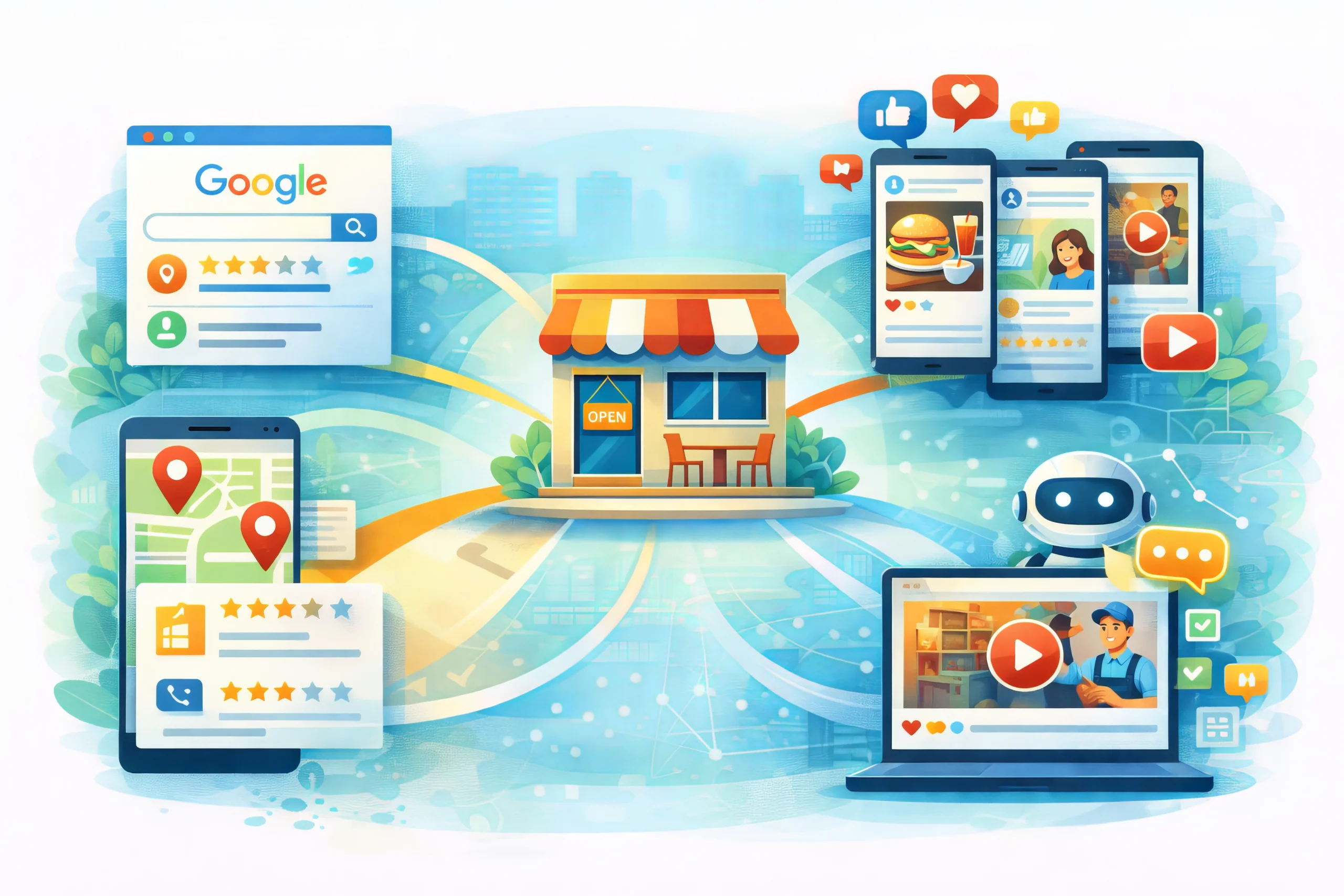
A customer can find a business through a Google search, a map result, a social media recommendation, a video, or even a response generated by artificial intelligence.
Each of these touchpoints is part of the visibility ecosystem.
For this reason, the most effective digital strategies don’t focus solely on one platform, but rather on building a coherent presence that allows a business to appear across several of these spaces when customers are evaluating their options.
What This Means for Your Business’s Visibility
The way customers discover businesses continues to evolve. Today people use different platforms to research, compare, and decide which company can best resolve their need.
Search engines, local maps, reviews, social media, video content, and artificial intelligence tools are all part of this new discovery landscape.
Understanding how these channels work allows businesses to evaluate more clearly where they are currently showing up and where opportunities exist to improve their visibility.
In an increasingly competitive market, understanding where customers are searching is the first step to making sure you’re present when it really matters.